 RoundCraft
Carefully crafted quiz rounds, played the pub-quiz way
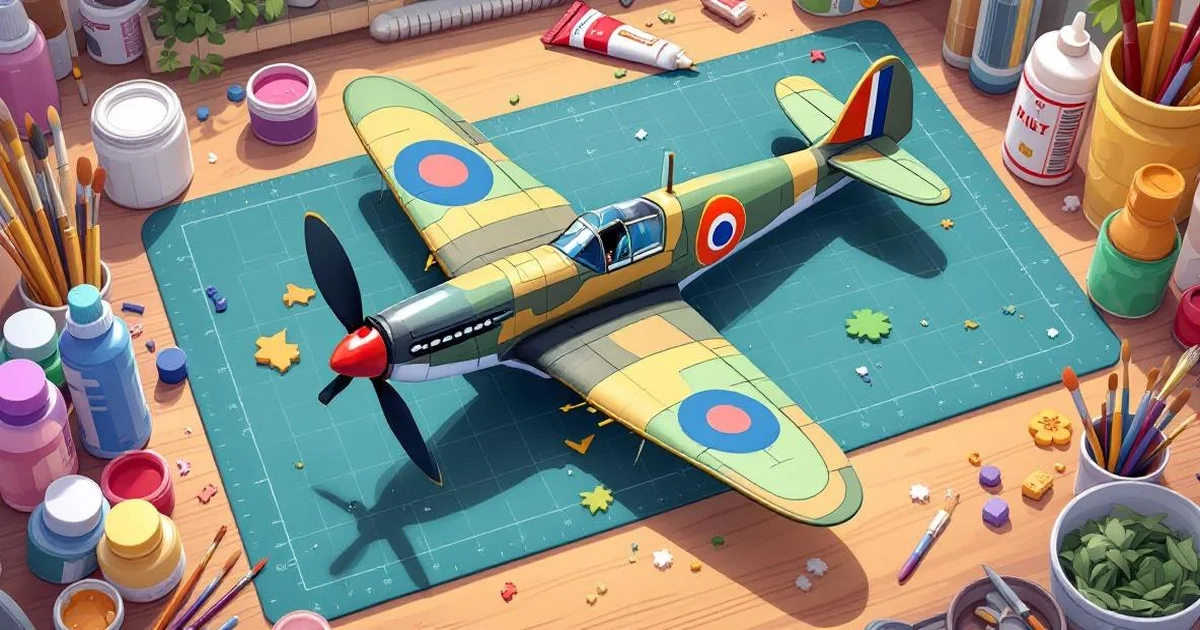
Scale models, Spitfires, and sticky fingers — how much do you really know about Airfix, the iconic British model kit brand? Play now and find out!
Play interactively with scoring — can you get a high score?
▶ Play this quiz🧠 Want to remember more of what you learn? Train with Memory Gym →
The name 'Airfix' combined the process of fixing air into inflatable products with Kove's desire for a brand that would appear first in trade directories.
Known as the 'BTK' after its spurious squadron code letters, the kit was a scaled-down copy of Aurora's 1/48 Spitfire — sold in polybag packaging.
Woolworths insisted on a two-shilling retail price, leading to the innovative polybag packaging that made plastic modelling affordable for the masses.
Kove chose the name 'Airfix' to combine the process of fixing air into inflatable products and to ensure the brand appeared first alphabetically in trade directories.
The TE20 tractor was initially hand-assembled from cellulose acetate for sales representatives — only 50 units were produced before Airfix switched to selling unassembled kits through Woolworths.
Although the Meccano and Dinky divisions struggled financially after the acquisition, the Airfix kit range itself remained highly profitable.
Production was moved to the Miro Meccano factory in Calais, and MPC kits — also owned by General Mills — were marketed under the Airfix brand in the UK.
The shift to injection moulding was prompted by wartime scarcity of rubber, which forced the company to explore alternative materials — making Airfix the UK's largest manufacturer of plastic pocket combs.
Edwards convinced Airfix to appoint him chief designer after complaints about the inaccuracy of earlier kits — his improved Spitfire Mk IX replaced the original 'BTK' model.
The kit contained 272 parts and an optional 3-volt motor — it wasn't until 1979 that four 1/8 scale motorcycles were added alongside it in Series 20.
Feel free to use these questions in your own quiz. Or build a whole quiz in minutes with RoundCraft Studio: pick trivia, picture, music and current affairs rounds from our extensive library, swap any question or add your own, then print the sheets or let teams play on their phones.
Free to sign up and build. Printing and online play for £4.99 a month.
Sign up free