 RoundCraft
Carefully crafted quiz rounds, played the pub-quiz way
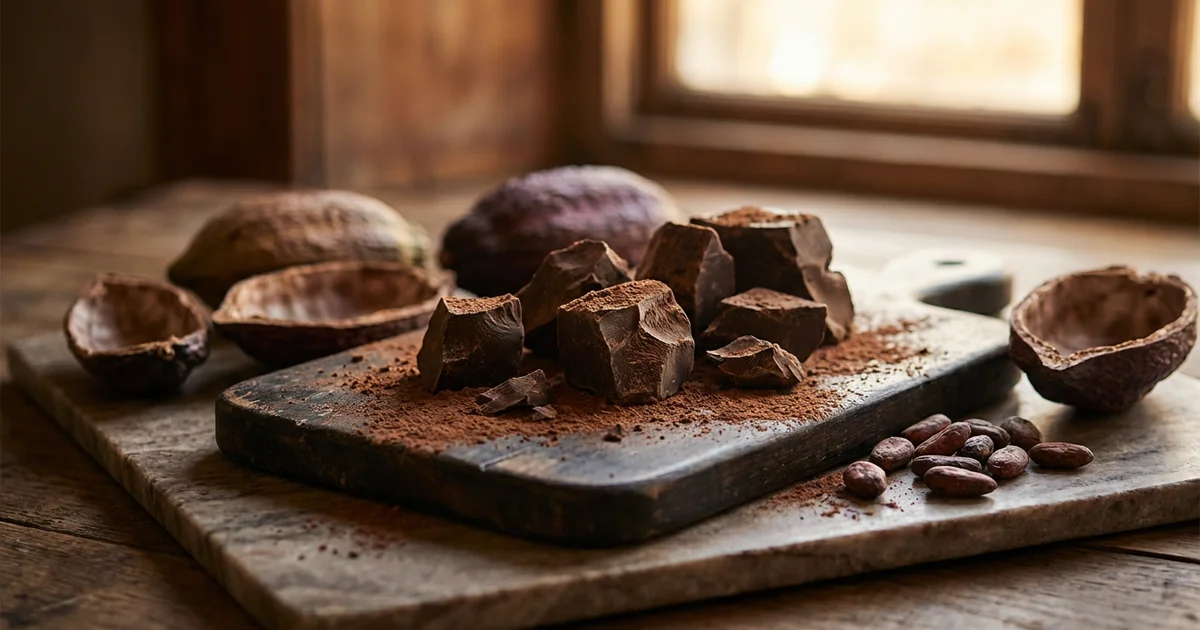
From cacao origins and Cadbury classics to tempering science and chocolate history, how sweet is your knowledge? Test your knowledge now.
Play interactively with scoring — can you get a high score?
▶ Play this quiz🧠 Want to remember these answers? This quiz is level 88 of Memory Gym →
Cacao trees (Theobroma cacao) only grow within about 20 degrees of the equator, and their name literally means 'food of the gods' in Greek.
Cadbury's Roses were launched in 1938 and Heroes in 1999 — both tins have become a staple of British Christmas celebrations for decades.
The four-finger Kit Kat was introduced in 1935 and its iconic 'Break me off a piece of that Kit Kat bar' slogan has made it one of the most recognisable chocolate bars in the world.
The Nahuatl word most commonly cited as the root of 'chocolate' is 'xocolātl', though linguists still debate its exact origins.
Under the same EU rules, milk chocolate only needs to contain 25% cocoa solids — considerably less than the 35% required for dark chocolate.
Ivory Coast produces more cacao than any other nation on Earth, with the crop so central to its economy that fluctuations in global chocolate demand can directly affect the country's GDP.
The word 'chocolate' is thought to derive from the Nahuatl word 'xocolatl', meaning 'bitter water' — a far cry from the sweet bars we enjoy today.
Form V crystals melt at just below body temperature (around 34°C), which is precisely why good chocolate melts so pleasingly on the tongue.
Daniel Peter spent around eight years experimenting before successfully using Henri Nestlé's condensed milk to create the first milk chocolate bar.
J.S. Fry & Sons' 1847 chocolate bar, called 'Chocolat Délicieux à Manger', was a landmark moment in confectionery history — the company was later absorbed by Cadbury in 1919, though the Fry's brand lives on in products like Fry's Turkish Delight.
Feel free to use these questions in your own quiz. Or build a whole quiz in minutes with RoundCraft Studio: pick trivia, picture, music and current affairs rounds from our extensive library, swap any question or add your own, then print the sheets or let teams play on their phones.
Free to sign up and build. Printing and online play for £4.99 a month.
Sign up free
